Roof Repair or Roof Replacement? How New Jersey Homeowners Decide
How to decide between roof repair and full replacement in New Jersey, with age, damage, and cost factors that matter most for older North Jersey homes.
Why this decision is harder than it sounds
A leak or a missing shingle does not automatically mean you need a new roof, and a roof that looks fine from the driveway does not automatically mean repair is the right call. The honest answer depends on the roof's age, how many separate problems are showing up, and what the decking underneath looks like once someone actually gets up there.
North Jersey adds a wrinkle that homeowners in milder climates do not deal with. Freeze-thaw cycles each winter push moisture into small cracks and joints, then expand it, widening the damage every season. A roof that would age gracefully in a warmer state can develop compounding problems here faster than the shingle warranty suggests, which changes the math on repair versus replacement.
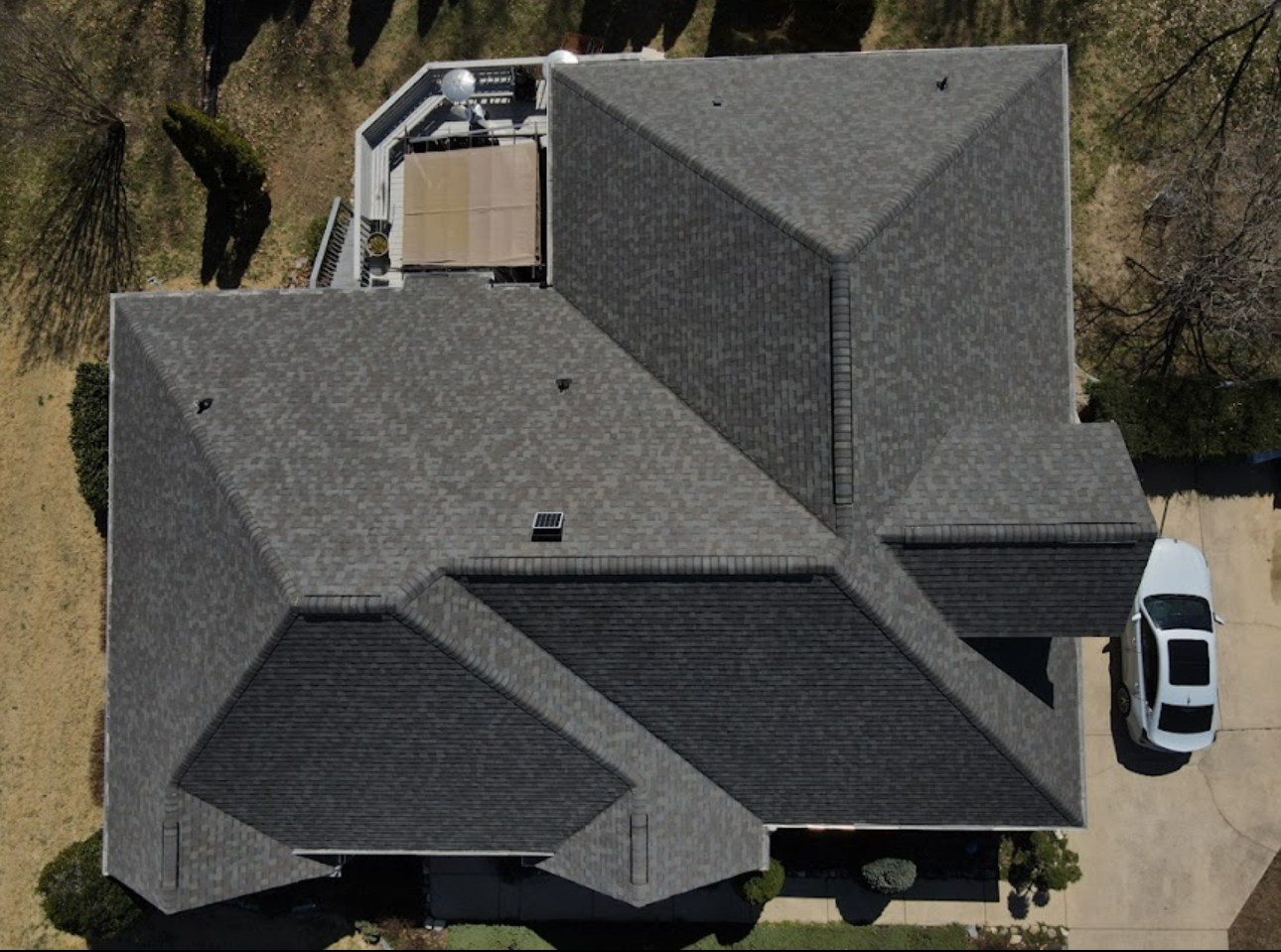
We approach this the same way every time: inspect first, sell second. A free drone inspection lets us see the whole field of the roof, the flashing details, and the attic ventilation without guessing, and that inspection is what should drive the recommendation, not the calendar or a sales quota.
When repair is the right call
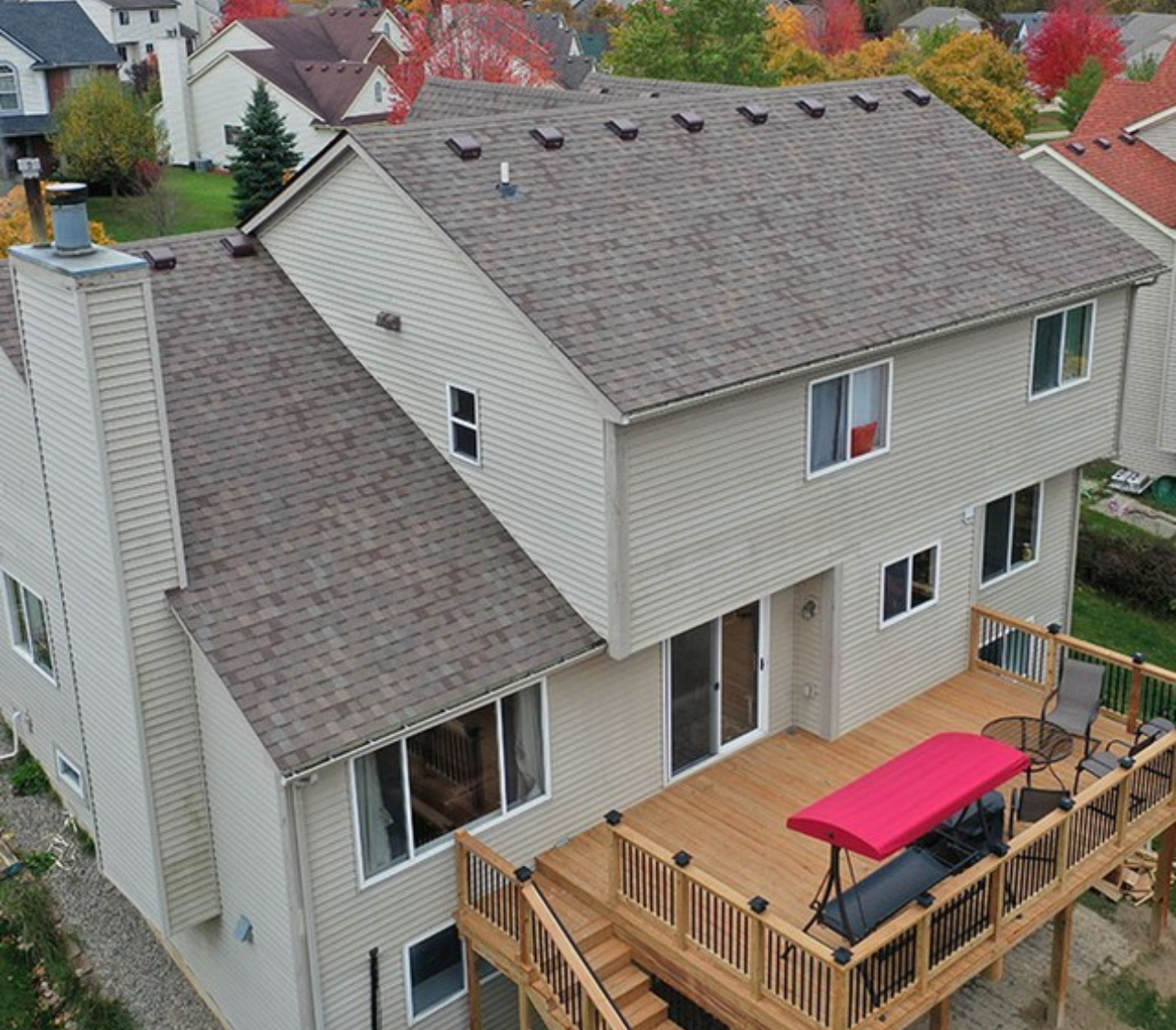
Repair makes sense when the problem is isolated. A cracked pipe boot, a section of lifted shingles from wind, a chimney flashing leak, or storm damage limited to one slope are all classic repair scenarios. If the rest of the roof is sound and the shingles still have useful life left, spending $450 to $2,500 to fix the specific issue is the financially responsible move.
Age matters here too. A 10 or 12 year old architectural shingle roof with one failed area is very likely a repair candidate, because the field of the roof still has a decade or more of expected service life. Fixing the one bad spot buys time without wasting money on a premature replacement.
Repair is also usually right when the decking underneath is solid. We check this during every repair estimate, because soft or delaminated plywood changes the scope. If the deck is sound and the leak source is a flashing or fastener issue, a properly done repair should hold for years, not months.
When replacement is the smarter investment
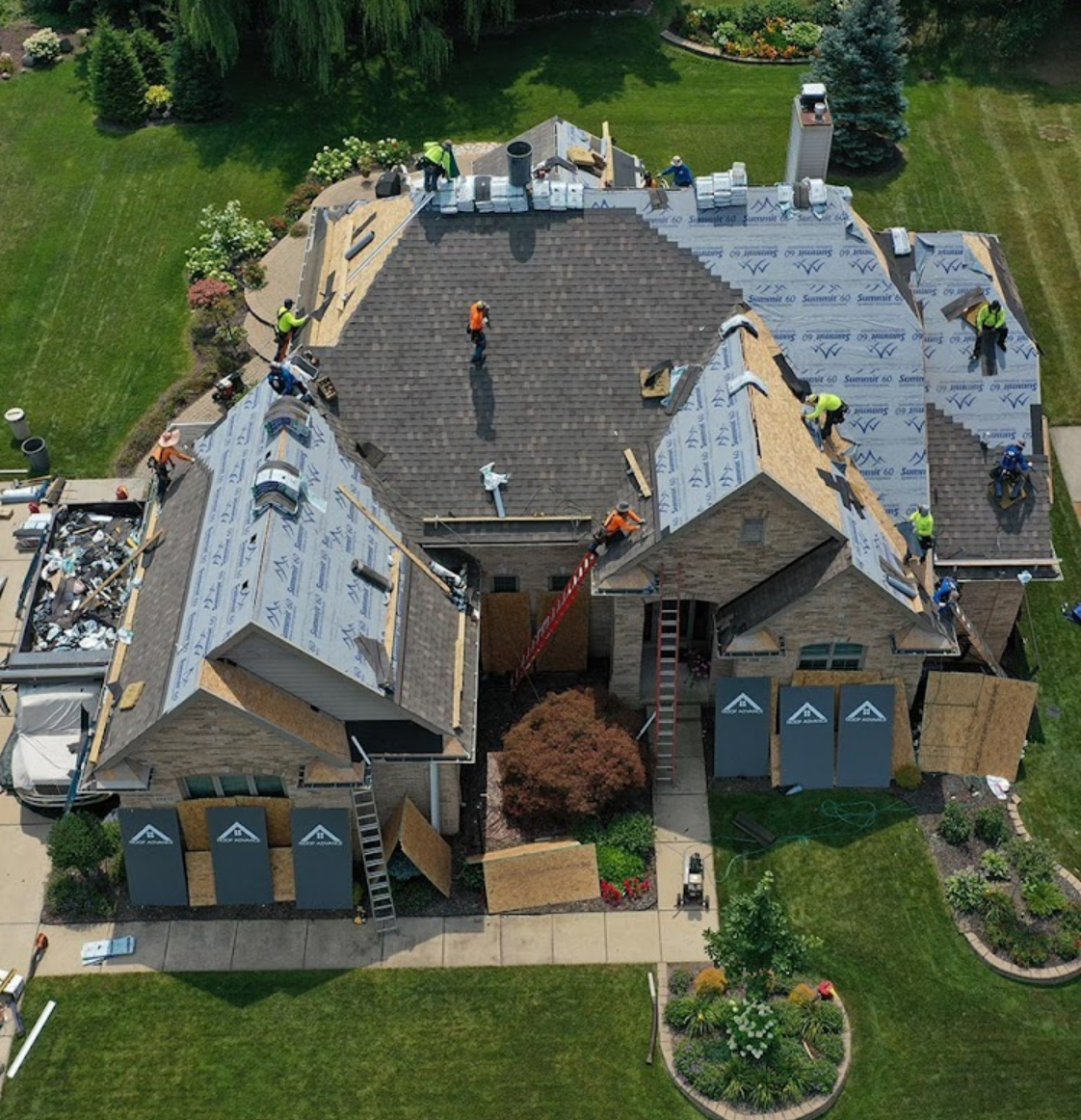
Replacement becomes the better decision once a roof is old enough that repairs are treating symptoms rather than the cause. Asphalt shingle roofs in New Jersey typically last 20 to 25 years, and once a roof passes that age, granule loss, brittle shingles, and widespread cracking mean any repair is a temporary patch on a system that is failing as a whole.
Multiple, unrelated leak points are another signal. If water is coming in near the chimney, in a valley, and along an exterior wall in the same season, that usually means the underlayment has failed broadly rather than one detail being bad. At that point, patching each spot as it fails costs more over two or three years than doing the replacement once.
We also look at how many layers of shingles are already on the roof and what the decking looks like. Many older Garfield, Passaic and Clifton homes still have original 1x6 plank decking from a prior generation of construction. Once that decking has gaps, rot, or sponginess from years of ice dam moisture, a repair cannot fix the substrate, and replacement with new decking is the only real solution.
Finally, consider the roof holistically against your plans for the house. If you intend to stay 10 or more years, and the roof is within a few years of the end of its expected life anyway, replacing it on your schedule, rather than after an emergency leak, is usually the lower-stress and lower-cost path.
The role of ice dams and shaded lots
Ice dams are one of the most common reasons a seemingly fine North Jersey roof develops a sudden interior leak in January or February. Snow melts from attic heat, refreezes at the cold eave, and backs water up under the shingles. Homes with poor attic insulation or ventilation are especially prone to this, and it can happen on roofs of almost any age.
If ice dam damage is a one-time event tied to a specific storm and the roof is otherwise young, ice-and-water shield repair at the eaves plus attic ventilation improvements is usually enough. If ice dam damage recurs winter after winter on an older roof, that pattern often points toward replacement with properly installed ice-and-water membrane across the full eave and valley system.
Heavily shaded, tree-canopy lots common in parts of Englewood and Paramus create a related but different problem: moss and algae growth that holds moisture against the shingles longer than a sunny roof would ever experience. This shortens shingle life even when the roof looks structurally fine, and it is worth flagging to your inspector specifically.
What a fair inspection should tell you
A useful inspection report does more than say pass or fail. It should tell you the approximate age and remaining life of the current roofing, the condition of the decking where it is visible, whether flashing at chimneys and walls meets current standards, and whether attic ventilation is adequate.
It should also be specific about what a repair would and would not fix. If a contractor recommends replacement, ask directly what would happen if you repaired instead, and how long that repair is likely to last. A contractor confident in their assessment should be able to answer that plainly.
Making the financial comparison
Run the numbers over a realistic time horizon rather than just today's invoice. A $1,500 repair on a 22-year-old roof that needs another $1,500 repair in two years and full replacement in five years costs more in total than doing the $9,000 to $20,000 replacement now, especially once you factor in the risk of interior water damage between now and then.
On the other hand, spending $16,000 to replace a 12-year-old roof because of one leak wastes a decade of remaining shingle life. The right answer is almost always specific to your roof's age and condition, not a general rule of thumb.
Questions homeowners ask us on the phone
How do I know if my roof needs to be replaced or just repaired in NJ?
Look at age and scope. A roof under 15 years old with one isolated leak is usually a repair. A roof over 20 years old, or one with multiple unrelated leaks and visible deck damage, is usually a replacement candidate. A free inspection with drone imagery gives you a specific answer instead of a guess.
Can a roofer patch just one section of my roof?
Yes, if the damage is isolated and the rest of the roof is structurally sound. Common patch repairs include flashing at chimneys and walls, storm damage on one slope, and pipe boot replacement. We match shingles as closely as possible, though some color variation is normal on older roofs.
Will repairing an old roof instead of replacing it save me money?
Sometimes short term, but not always long term. If the roof is near the end of its expected 20 to 25 year life, repeated repairs can add up to more than a single replacement while still leaving you with an aging roof. We are direct with homeowners when a repair is likely to be temporary.
Does ice damming mean I need a new roof?
Not necessarily. A single ice dam event on a younger roof is often fixed with eave repair and better attic ventilation. Recurring ice dam damage on an older roof, especially with soft decking, is a stronger signal that replacement with full ice-and-water protection is the better long-term fix.
How long does a roof repair last compared to replacement?
A well-done repair on a sound roof can last for the remaining life of that roof, often 5 to 15 years. A full replacement resets the clock with a new 20 to 25 year expected lifespan and comes with our 10-year Alba Pro workmanship guarantee on the installation itself.
Run your roof size, material and pitch through our New Jersey roof cost calculator for a planning range in about 30 seconds, then call +1 (201) 994-8577 for a free on-site inspection and written estimate.
Call +1 (201) 994-8577