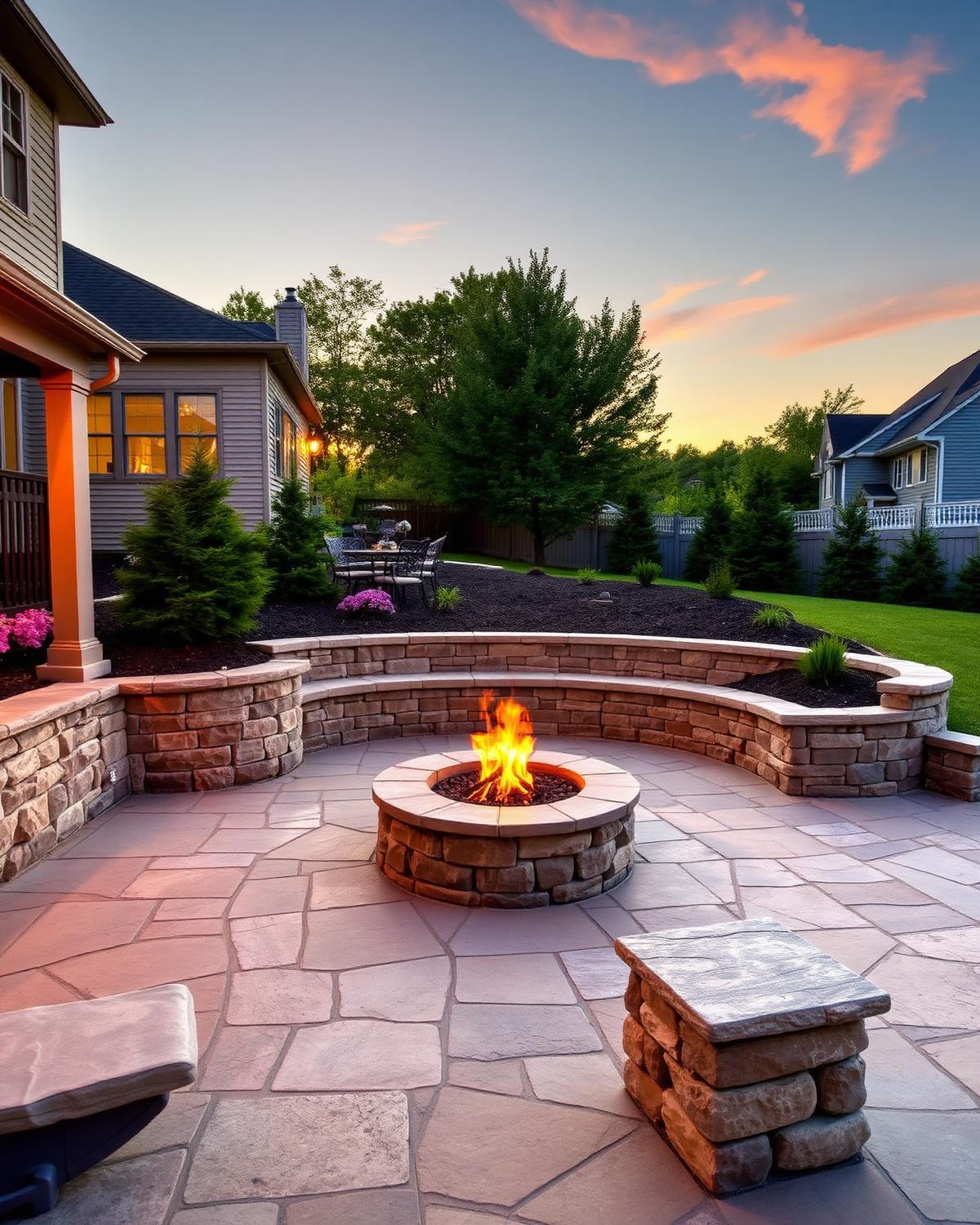
Stone and brick that age with grace.
From historic brick restoration in Montclair to natural stone patios in Paramus, our masons combine traditional craft with modern engineering. We tuck-point, rebuild, and lay new stonework with proper drainage and frost-depth footings.
Our masonry services
- Brick & stone repair / re-pointing
- Paver patios & walkways
- Stone & block retaining walls
- Fire pits, outdoor kitchens, sitting walls
- Stoop & step rebuilds
- Concrete driveways & aprons

What masonry work in North Jersey actually involves
Masonry work is unforgiving of the wrong material choice in a way that most exterior trades are not. Brick and stone assemblies are designed to manage water by letting it pass in and dry back out, and almost every masonry failure we are called to repair started with someone interrupting that cycle — a hard mortar where a soft one belonged, a waterproof sealer where a breathable one was needed, or a modern patch against a century-old wall.
Mortar hardness is the crux of it. Older North Jersey masonry was laid with lime mortar that is deliberately softer than the surrounding brick, so seasonal movement and freeze-thaw damage the joint rather than the brick face. Re-point that wall with a high-Portland mix and the relationship inverts: the joint becomes the hardest element, and the brick faces start to spall instead. That damage is not reversible — a spalled brick has to be replaced.
Freeze-thaw is the load that finds every one of these mistakes. Our winters swing across the freezing point repeatedly rather than holding cold, so water that has entered a wall expands and contracts many times each season. Any detail that admits water without letting it escape will fail here faster than the same detail would in a colder, drier climate.
Start to finish, step by step.
No surprises mid-job. This is the same sequence on every project we take.
Assess the wall and identify the water path
We determine where water is entering — a failed cap, an open joint, a bad grade, a leaking gutter above — because repairing masonry without fixing the source means repairing it again.
Match the existing mortar
We assess the hardness, colour and sand of the original mortar and match it. On pre-1930 masonry that means a lime-based mix so the joint stays the sacrificial element.
Cut out and re-point properly
Joints are cut back to sound mortar at a proper depth rather than smeared over. A skim coat over a failing joint looks fine for a season and then falls off along with more of the wall.
Replace spalled and damaged units
Brick or stone that has lost its face cannot be repaired and gets replaced with matched units. We source as close a match as is available and lay them into the existing pattern.
Rebuild caps, crowns and copings
The top of any masonry element is where water gets in. Caps and copings are rebuilt to shed water clear of the wall face with proper overhang and drip.
Breathable protection
Where a sealer is appropriate we use a vapor-permeable product that sheds liquid water while letting the wall dry. We do not paint or use film-forming sealers on historic masonry.
Why two quotes can look nothing alike.
- Extent of re-pointing
- Spot re-pointing of a failed area is a different job from re-pointing a full elevation. We measure the actual affected area rather than pricing the whole wall by default.
- Access and height
- Work above the first floor needs staging or lift access, and on tight urban lots that setup is a real cost line.
- Matching materials
- Sourcing brick or stone to match an older wall takes time and sometimes carries a premium. The alternative is a repair that is visible from the street forever.
- Structural versus cosmetic
- A bulging or displaced wall is a structural repair — often a rebuild of that section — rather than a re-point, and it is priced accordingly. The inspection establishes which one you have.
- Related water sources
- If a gutter, cap or grade issue is driving the damage, fixing it is part of a durable repair. We include it in the scope rather than repairing masonry that will fail again.
- Mortar joints that are recessed, crumbling, or can be raked out with a screwdriver
- Brick faces flaking, popping or shedding their surface
- White chalky efflorescence staining on the wall face
- Step-cracking following the mortar joints in a stair pattern
- Any section of wall visibly bulging, leaning or displaced
- Damp or staining on the inside of an exterior masonry wall
Seeing any of these? A free inspection costs you nothing and you get the photos either way.
What homeowners ask us.
How long does a stone patio last?+
Properly installed paver patios (compacted base, polymeric sand, edge restraint) last 25–40 years. Natural stone lasts indefinitely.
Can you match my existing brick?+
Yes. We source from regional brick yards and salvage suppliers and can match color, size, and texture on most homes built after 1900.