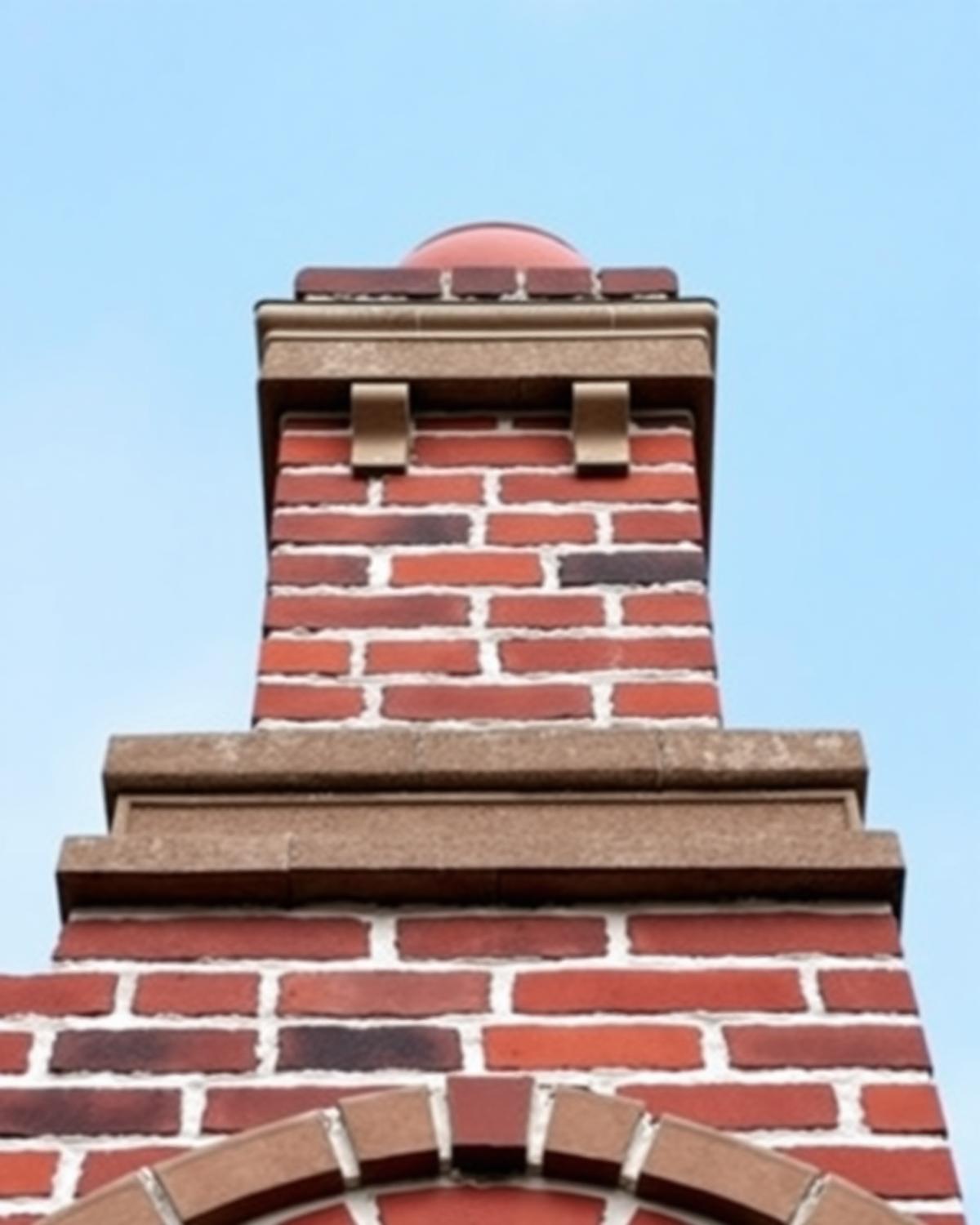
Restore the heart of the home.
Chimneys are the most weather-exposed feature on your house. We rebuild crumbling crowns, tuck-point mortar joints, install stainless-steel liners, replace rusted caps, and waterproof masonry with vapor-permeable sealers. Every job starts with a 25-point inspection.
Our chimney services
- Chimney rebuilds & partial reconstructions
- Crown repair & re-pointing
- Stainless steel liner installation
- Chimney caps, dampers & flashing
- Waterproofing & moisture damage repair
- Annual safety inspections

What chimney work in North Jersey actually involves
Chimneys fail from the top down and from the inside out, and by the time the damage is visible from the ground it is usually well advanced. The crown — the concrete cap at the very top — is the single most common failure point we find, and it is also the cheapest thing to fix. A cracked crown lets water into the masonry, freeze-thaw does the rest, and what began as a few hundred dollars of concrete work becomes a partial rebuild.
The second issue is specific to older North Jersey housing: mortar hardness. Chimneys built before roughly 1930 used soft lime mortar, deliberately softer than the brick so that movement and moisture would damage the mortar rather than the brick. Re-pointing one of those with a modern high-Portland mix reverses that relationship and starts spalling the brick faces within a few winters. Matching the original mix matters more than most homeowners are ever told.
The third is liners, and it is a safety issue rather than a cosmetic one. A great many homes in our area converted from oil or coal to gas without resizing the flue. An oversized flue runs too cool, condenses acidic flue gas against the clay tile, and destroys the liner from the inside while everything looks fine outside.
Start to finish, step by step.
No surprises mid-job. This is the same sequence on every project we take.
Full inspection, top and interior
We examine the crown, the brick and mortar condition, the flashing where the stack meets the roof, and the flue interior. We check appliance sizing against flue diameter, because a mismatch there is both a performance and a safety problem.
Diagnosis before recommendation
We tell you which of the four common problems you actually have — crown, mortar, flashing or liner. Most chimneys need one or two of those, not a rebuild, and we would rather say so.
Crown and flashing repair
A properly formed crown overhangs the brick with a drip edge so water is thrown clear instead of running down the face. Roof flashing is stepped and counter-flashed into a cut mortar joint, not sealed with roofing cement.
Re-pointing with matched mortar
Joints are cut back to sound mortar and re-pointed with a mix matched in hardness to the original. On pre-1930 masonry that means a lime-based mix, not standard Portland.
Relining where required
Where the clay liner is cracked or the flue is oversized for the appliance, we install a correctly sized stainless liner. That resolves both the draft problem and the condensation damage permanently.
Water management
A cap keeps rain and animals out of the flue, and a vapor-permeable masonry sealer sheds water while still letting the brick dry. We never paint masonry — it traps moisture and accelerates spalling.
Why two quotes can look nothing alike.
- Scope: repair versus rebuild
- A crown rebuild and re-point is a fraction of the cost of taking a stack down and rebuilding it. Which one you need depends on how far the water damage has progressed, and that is what the inspection determines.
- Height and access
- A stack on a steep third-story roof needs staging that a single-story chimney does not, and that access work is a real part of the cost.
- Mortar matching
- Matching historic lime mortar takes more care and costs slightly more than running a standard mix. On older masonry it is what prevents you paying again in five years.
- Liner requirements
- Stainless relining is priced by flue height and diameter. It is usually the largest single line on a chimney estimate and the one most often left off cheaper quotes.
- White chalky staining on the exterior brick, which indicates water moving through the masonry
- Brick faces flaking, popping or crumbling away
- Visible cracks in the concrete crown at the top of the stack
- Damp patches or staining on interior walls or ceilings near the chimney
- A downdraft or persistent smoky smell when the fireplace is not in use
- Debris or pieces of clay tile falling into the firebox
Seeing any of these? A free inspection costs you nothing and you get the photos either way.
What homeowners ask us.
How often should my chimney be inspected?+
The CSIA recommends a Level 1 inspection every year, before burning season. We offer a free annual inspection with every roof or masonry project.
What's the difference between repointing and rebuilding?+
Repointing replaces the mortar between bricks. Rebuilding takes the chimney down to the roofline (or further) and reconstructs it brick by brick. We'll recommend the least-invasive option that solves the problem.