What Happens During a Roof Replacement, Day by Day
A day-by-day walkthrough of a North Jersey roof replacement, from tear-off and decking checks to final cleanup and the closed municipal inspection.
Before the crew arrives
By the time a crew shows up to start work, the planning is already done. That means the free drone roof inspection has been completed, a written estimate delivered within 24 hours, the material order placed, and the permit filed with the municipal building department. On most North Jersey streets, we also coordinate delivery timing so the material drop doesn't block driveways or narrow the road longer than necessary.
A day or two before the start date, we ask homeowners to move vehicles out of the driveway, trim back low branches near the roofline if needed, and take down anything fragile on walls or shelves that vibration from tear-off could shake loose. We also confirm with the homeowner where the dumpster or material staging will sit for the duration of the job.
Morning of day one: setup and protection
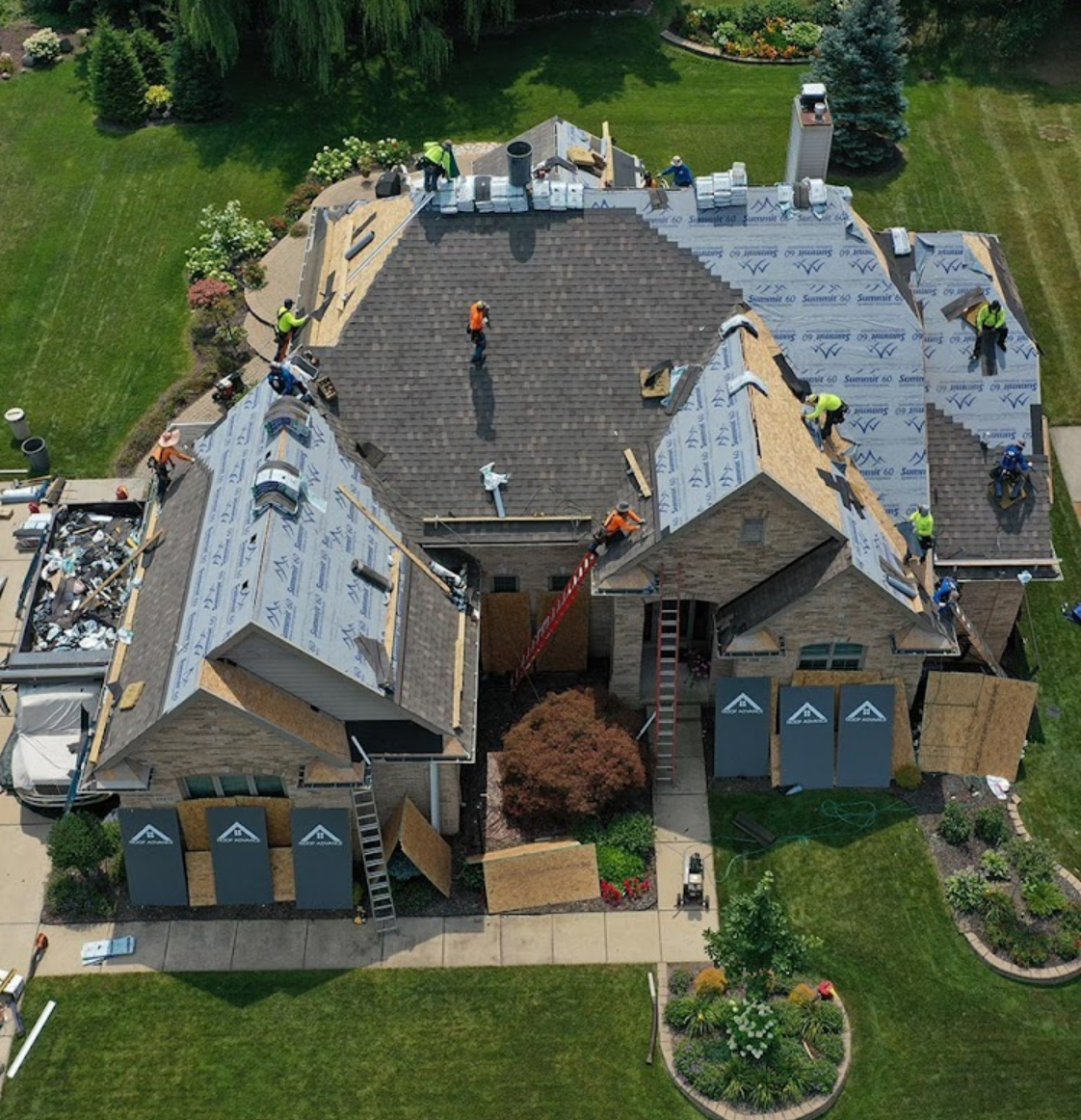
The crew's first hour on-site is protection, not roofing. Tarps go down over landscaping, AC units, and anything else near the drip line of the roof. Plywood or tarps protect the lawn and driveway where ladders and material staging will sit. Gutters get covered or protected where tear-off debris could dent them.
Once protection is in place, tear-off begins, usually starting at the section of roof farthest from the material staging area and working back. Old shingles, underlayment, and any damaged flashing come off down to the decking. On a typical single-family North Jersey roof, tear-off for the whole roof usually takes a few hours to half a day depending on size and number of layers.
Decking inspection, the step that can't be skipped
Once the deck is exposed, the crew walks the entire roof checking for soft spots, delamination, or rot, most commonly found near chimneys, valleys, and old vent penetrations where past leaks went unnoticed from inside. This is the point in the project where surprises show up, because decking condition isn't fully visible until the old shingles are off.
Any section of decking that fails inspection gets replaced with new plywood before anything else goes down. We price decking replacement at $70 to $110 per sheet installed and always flag it to the homeowner before proceeding rather than assuming approval, even when the estimate included a decking allowance.
On a straightforward roof with sound decking throughout, this step takes under an hour. On an older home with original plank decking, it can take longer and turn up more sheets needing replacement.
Underlayment, flashing, and ventilation components
With sound decking confirmed, the crew installs ice-and-water shield at the eaves, valleys, and around penetrations, followed by synthetic underlayment across the rest of the roof. New flashing goes in at every chimney, wall intersection, skylight, and sidewall, since reusing old flashing is one of the more common causes of leaks in re-roofs done by less careful contractors.
This is also when ventilation upgrades happen: baffles installed at the eaves if needed, soffit vents cleared or added, and the ridge slot cut for a continuous ridge vent if the roof is being upgraded from static roof vents. Getting this sequence right matters because everything above it depends on it being done correctly.
Shingle installation
Starter strip goes down first along the eaves and rakes, followed by field shingles working up the roof in courses, aligned and nailed according to the manufacturer's pattern for the wind rating being installed. Valleys, hips, and any step flashing along dormers or walls are woven into this sequence rather than added afterward.
Ridge cap shingles go on last, covering the ridge vent slot if one was cut, finishing the roof's most exposed line. On a typical single-family roof this entire phase, from starter strip to ridge cap, usually takes the bulk of a single day for a straightforward roof, longer for roofs with many valleys, dormers, or a steep pitch.
Cleanup and the final walkthrough
Cleanup on a roofing job is not an afterthought. The crew uses a magnetic roller sweep across the lawn, driveway, and any planting beds near the house to pick up stray nails, in addition to hand-picking larger debris. Tarps and protective plywood come up, and the dumpster or material trailer leaves the property.
A final walkthrough with the homeowner covers the completed roof, any gutter or siding areas that were protected during work, and a review of what was replaced versus repaired, including photos of the decking work if any was needed. We schedule the municipal final inspection at this point rather than leaving the permit open, and provide the closed paperwork along with the 10-year Alba Pro workmanship guarantee once the town signs off.
Questions homeowners ask us on the phone
How long does a roof replacement actually take in one day?
Most single-family North Jersey roofs are torn off, decked as needed, and fully shingled in one day, with cleanup finishing that same afternoon or evening. Larger roofs, steep pitches, or roofs needing significant decking replacement can take two days. Weather and crew size also affect the timeline.
What happens if the crew finds rotten decking during tear-off?
Any decking that's soft, delaminated, or rotted gets replaced with new plywood before shingles go down, priced at $70 to $110 per sheet installed. We flag any decking replacement to the homeowner during the job rather than assuming approval, even when the original estimate included a decking allowance.
Will the roofing crew protect my landscaping and driveway?
Yes. Before tear-off starts, the crew tarps landscaping, AC units, and anything near the roofline, and protects the driveway and lawn where ladders and material staging will sit. Cleanup includes a magnetic roller sweep for nails across the yard and driveway before the crew leaves.
Do I need to be home during the roof replacement?
You don't need to be home the entire time, but it helps to be reachable if the crew finds decking damage that needs a decision, and to be available for the final walkthrough at the end. We recommend moving vehicles out of the driveway before the crew arrives.
Is the permit closed out automatically after the roof is done?
No, someone has to schedule and pass the municipal final inspection to close the permit. We schedule this as part of the job and provide the closed paperwork to the homeowner, since an open roofing permit can show up during a title search when the home is later sold.
Run your roof size, material and pitch through our New Jersey roof cost calculator for a planning range in about 30 seconds, then call +1 (201) 994-8577 for a free on-site inspection and written estimate.
Call +1 (201) 994-8577