Best Roofing Shingles for New Jersey Weather
How wind ratings, algae resistance, and sealant strips affect shingle performance through North Jersey winters, nor'easters, and summer heat.
What New Jersey weather actually does to a roof
North Jersey roofs go through a wider swing of conditions than most homeowners realize. Winters bring freeze-thaw cycles, ice damming at the eaves, and occasional nor'easters with sustained wind well above 50 mph. Summers bring heat that softens asphalt and UV exposure that dries it out over years. Humidity off the Passaic and Hackensack rivers keeps roofs damp longer after rain, which feeds algae growth on north-facing slopes.
No single failure mode destroys a roof here. Instead, shingles wear from repeated stress: wind lifts a tab slightly, water gets under it, the freeze-thaw cycle widens the gap, and a few years later that tab is gone. The shingle you choose, and how it is fastened and ventilated, determines how many of those cycles it survives.
This is why the same shingle line sold nationally performs differently depending on the wind rating tier you buy and how it's installed. A budget-tier product installed perfectly still lags behind a mid-tier product installed correctly.
Wind ratings that matter here
Architectural shingles sold today are typically rated at 110 mph, 130 mph, or 150 mph when installed with the manufacturer's specified nailing pattern and, in many cases, an upgraded starter strip or six-nail pattern instead of four. For North Jersey, we install shingles rated at 110 to 130 mph as the standard, since that rating covers the wind gusts our nor'easters and summer thunderstorms typically produce.
The rating is only valid if the installation matches the manufacturer's requirements. A 130 mph shingle nailed with a four-nail pattern in the wrong nailing zone performs like a lower-rated product. This is one of the most common shortcuts we see when we inspect roofs installed by other contractors: correct shingle, wrong nailing.
Sealant strips are the other half of wind resistance. Each shingle has a strip of adhesive that bonds to the shingle below it once warmed by the sun. Roofs installed in cold weather, or shingles stored improperly before installation, sometimes don't seal fully in year one, which is why we recommend a spring or summer install window when possible.
Algae resistance and the north side of the roof
The dark streaking many North Jersey homeowners notice on the north-facing roof slope, especially near the ridge, is algae, not dirt. It grows because that slope stays shaded and damp longer than south-facing slopes. It doesn't shorten the shingle's structural life much, but it looks bad and lowers curb appeal within a few years on standard shingles.
Algae-resistant shingles use copper-containing granules that release slowly over time and inhibit growth. Most quality architectural shingle lines now include this as standard, but it's worth confirming on the product data sheet rather than assuming, especially on lower-cost lines.
If your current roof already shows algae streaking, replacement shingles with algae-resistant granules will look better for longer, but nothing prevents all growth forever in a humid climate. Trimming overhanging branches that shade the roof also helps.
Underlayment and ice-and-water shield
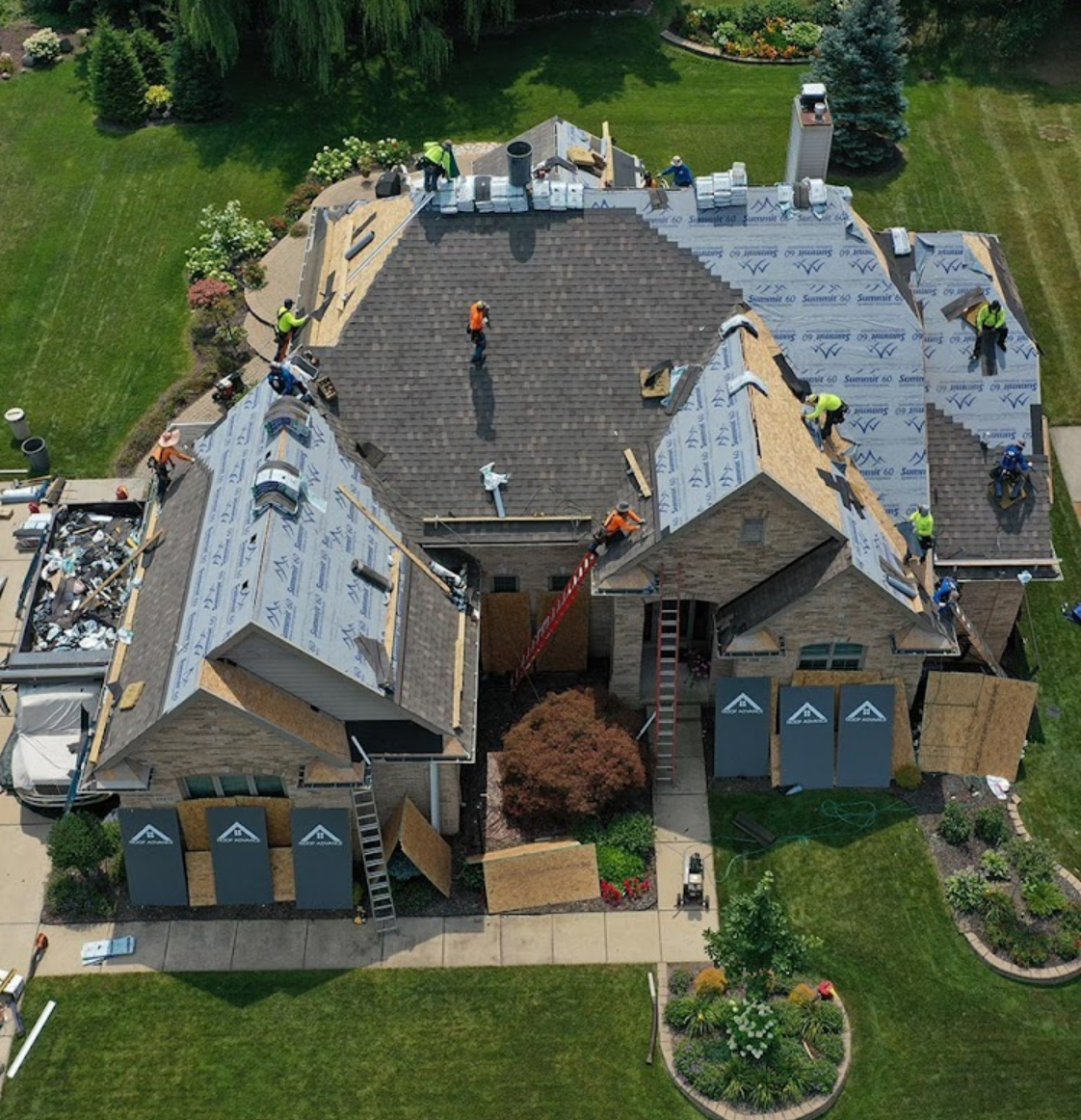
The shingle is the visible layer, but the underlayment underneath it does most of the work keeping water out during wind-driven rain and ice damming. Synthetic underlayment has replaced felt paper on nearly every job we do, because it resists tearing during install, lays flatter, and holds up longer if a shingle is damaged and the layer beneath is exposed for any length of time.
Ice-and-water shield is a self-adhering rubberized membrane installed at the eaves, in valleys, and around penetrations like chimneys and skylights. New Jersey's building code requires it at the eaves in areas prone to ice damming, which covers essentially all of Bergen, Passaic, and surrounding counties. It seals around nail penetrations, so even if ice backs water up under the shingles, it can't reach the decking.
Skipping or shorting ice-and-water shield is one of the most common corners cut on cheap re-roofs, because it isn't visible once shingles are installed. It's worth asking any contractor exactly how many feet up from the eave they install it and confirming it matches at least the code minimum for your roof's pitch.
Starter strips, ridge caps, and the details that fail first
A shingle roof is a system, not just field shingles. The starter strip along the eaves and rakes provides the first line of wind resistance and seals the very edge of the roof, where wind uplift is strongest. Using cut-down field shingles as a starter strip instead of purpose-made starter product is a shortcut that shows up as lifted edges within a few years.
Ridge cap shingles, installed along the peak, take more sun and wind exposure than any other part of the roof and are usually the first component to show wear. Matching ridge cap product to the field shingle line, rather than mixing in a generic cap, keeps the warranty intact and the color consistent.
Hip and ridge vents, flashing at every wall and chimney intersection, and step flashing along dormers all interact with the shingle field. A shingle upgrade on a roof with poor flashing details won't outperform a mid-tier shingle installed with correct flashing.
Matching the shingle to the house
For most capes, ranches, and colonials across Garfield, Clifton, and Passaic, a mid-tier architectural shingle rated 110 to 130 mph with algae-resistant granules covers the practical needs of the climate without paying for features the house won't use. For steeper or more exposed roofs, such as homes on higher ground in Paramus or Hackensack, a higher wind rating and heavier shingle profile is worth the modest price step up.
Color matters more than most homeowners expect for heat performance. Darker shingles run hotter in summer and can accelerate granule loss slightly faster over decades, though the difference is incremental rather than dramatic in this climate. It's a reasonable factor to weigh, not a reason to avoid a color you like.
Questions homeowners ask us on the phone
What wind rating should shingles have in North Jersey?
Most North Jersey homes do well with shingles rated 110 to 130 mph, installed with the manufacturer's specified nailing pattern. That rating range covers the gusts typical of our nor'easters and summer storms. The rating only holds if the nailing pattern and starter strip match the manufacturer's requirements.
Do algae-resistant shingles actually work?
Yes, they slow algae growth significantly compared to standard shingles, especially on shaded north-facing slopes common in North Jersey. They use copper-containing granules that release slowly over time. They reduce staining over the life of the roof but don't guarantee a roof stays completely streak-free in a humid climate.
Is ice-and-water shield required by code in New Jersey?
Yes, New Jersey's building code requires ice-and-water shield at the eaves in areas prone to ice damming, which includes Bergen, Passaic, and the surrounding counties. It's a self-adhering membrane that seals around nail holes so backed-up ice can't push water into the decking.
Does a more expensive shingle really last longer in this climate?
Generally yes, but installation quality matters more than shingle tier. A correctly installed mid-tier shingle with proper starter strip, ridge cap, flashing, and ventilation will outlast a premium shingle installed with shortcuts. Both the product and the installation need to be right.
Do darker shingles wear out faster in New Jersey summers?
Darker shingles run somewhat hotter in direct sun, which can marginally speed granule loss over decades, but the difference is small compared to installation quality and ventilation. Color is a reasonable aesthetic choice and shouldn't be the deciding factor for durability in this climate.
Run your roof size, material and pitch through our New Jersey roof cost calculator for a planning range in about 30 seconds, then call +1 (201) 994-8577 for a free on-site inspection and written estimate.
Call +1 (201) 994-8577